In the previous REI newsletter we discussed the importance of spectrum analyzer mobility in order to locate transmitters. Detecting and identifying types of signals is very important, but locating transmitters is equally, if not more important if you want to find malicious surveillance devices, and that requires a portable receiver. Moving the spectrum analyzer reveals changes in signal amplitude as it gets closer or further away from a signal’s source.
Is your company evaluating how to protect its intellectual assets? An IBM-sponsored study reports that the average cost of a data breach is $3.62 million and the average size of data breaches is on the rise. Today’s existing internet and mobile phone networks serve as digital listening posts anywhere in the world. There are more frequent occurrences where technical security vulnerabilities are opening the door to cybersecurity threats:
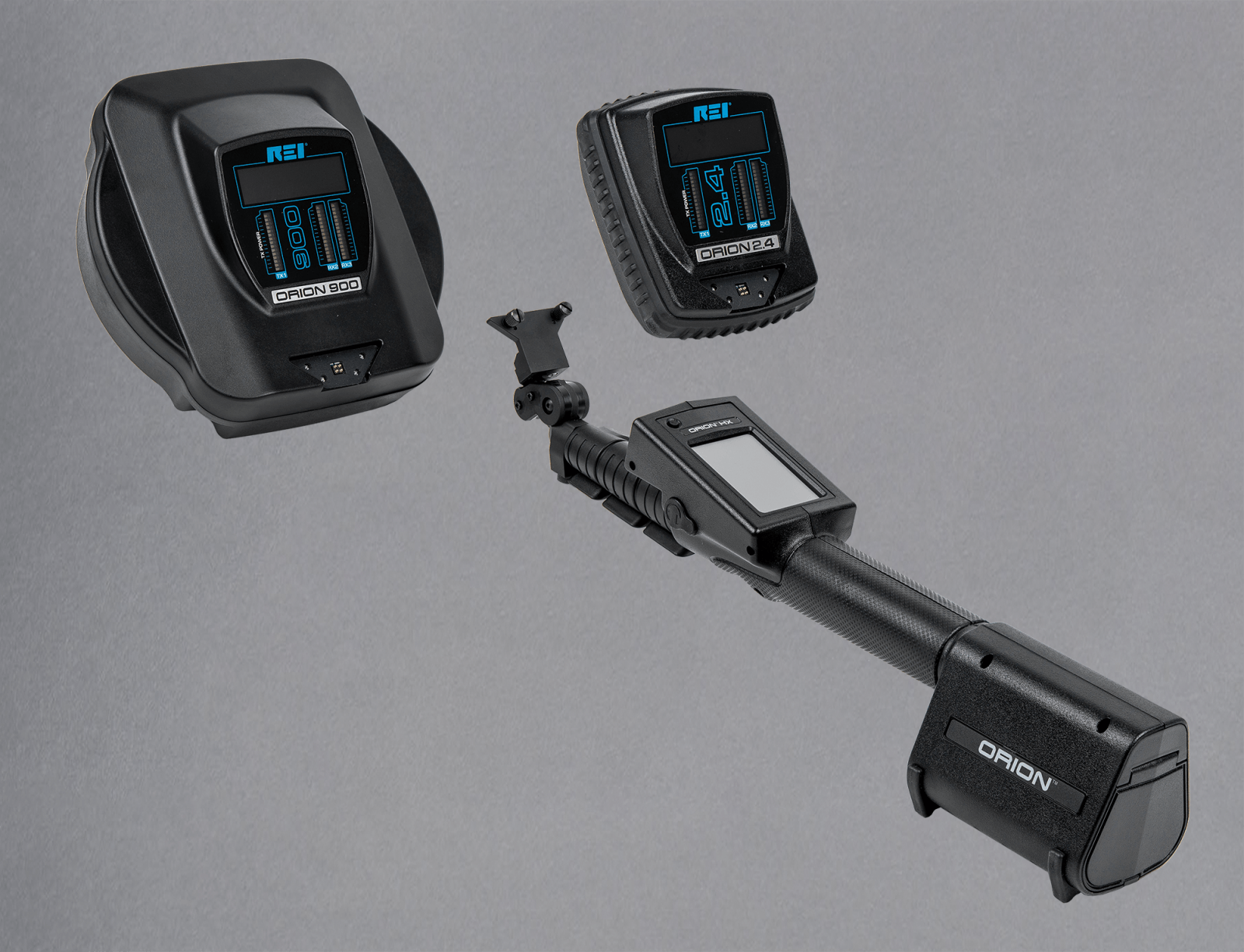
The new ORION 900 HX Non-Linear Junction Detector from REI detects electronic semi-conductor components through dense materials such as bricks, concrete, and soil. The longer 900 MHz wavelength excels at detecting older, less refined circuitry and also penetrating building and construction materials compared to the shorter wavelength of the 2.4 GHz model, which excels at detecting modern, surface mounted circuitry in normal office environments.
For those with both applications, a new ORION HX Deluxe package is available which includes interchangeable 900 MHz and 2.4 GHz antenna heads. The antenna heads are easily exchanged in under twenty seconds by simply turning a pair of thumb screws. The touch screen controller on the ORION handle automatically recognizes the attached antenna and displays the corresponding data.
Continue reading “New NLJD Locates Electronics in a Variety of Environments”
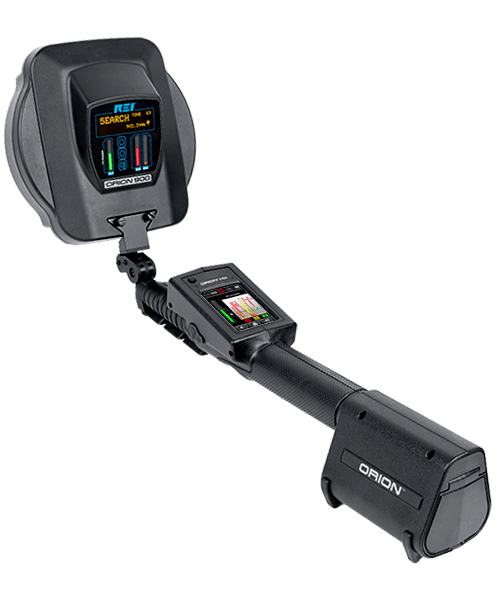 The new ORION 900 HX Non-Linear Junction Detector (NLJD) from REI detects electronic semi-conductor components through dense materials such as bricks, concrete, and soil.
The longer 900 MHz wavelength does better at detecting older, less refined circuitry and also penetrating building and construction materials compared to the shorter wavelength of the 2.4 GHz model, which is better suited for detecting modern, surface mounted circuitry in normal office environments.
There are many different types of spectrum analyzers including benchtop models, portable models, handheld units, and Software Defined Radio (SDR) units. While there are many different ways of comparing these products, most choose to focus primarily on the traditional spectrum analyzer specifications such as:
- Frequency Range
- SFDR – Spurious Free Dynamic Range
- DANL – Displayed Average Noise Level
- Phase Noise
- Sweep Speed
- Frequency Resolution
However, when using a spectrum analyzer to search for unknown signals which may pose a threat, mobility is another very important factor to consider. When doing a security survey, it is vital to be able to quickly pick up the spectrum analyzer and walk around an environment to compare RF signal strength in different locations.
New firmware for the ANDRE has been released. You can locate the current version on your ANDRE by visiting SETUP and selecting Version.
If your version is lower than 1.2.21, you will benefit from installing the new firmware. The 1.2.21 update includes: Continue reading “ANDRE Firmware Update Available”

Research Electronics International is pleased to announce the TALAN 3.0 Telephone and Line Analyzer with enhanced VoIP analysis and new earth/shield/ground testing. The portable TALAN 3.0 analyzes digital, analog, and VoIP phone systems and wiring for faults, anomalies, and security risks using a suite of telephone tests including an automatic switching matrix.
What’s New in TALAN 3.0:
- VoIP traffic analysis on phones, networks
- Patent-pending FFT algorithm for visual display of VoIP traffic
- Earth/Ground testing for modified connections to extraneous wiring
- Advanced input panel to accept and test shielded ethernet cables
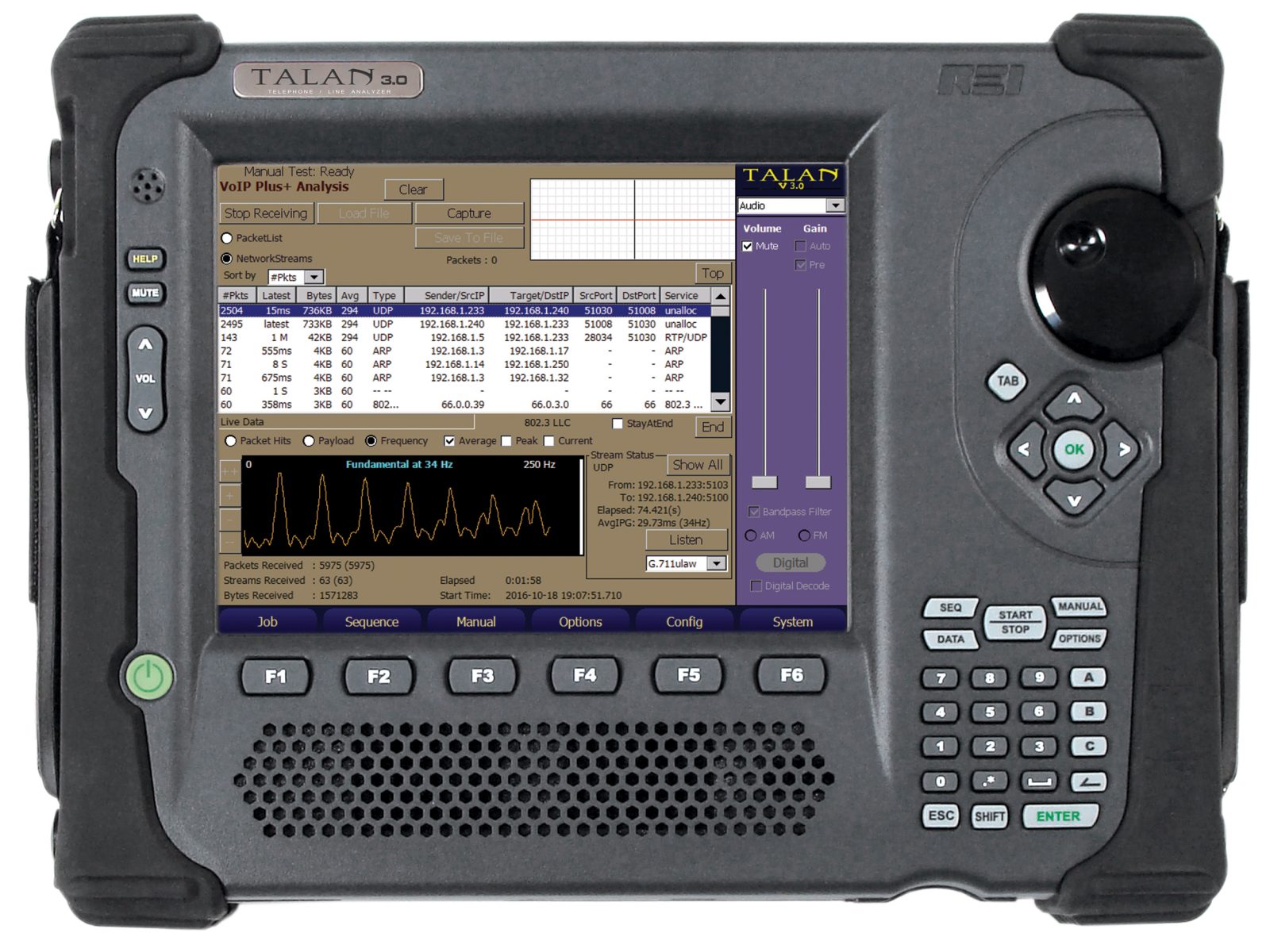 The TALAN Telephone and Line Analyzer provides many automated tests in a single product to detect and locate illicit surveillance devices (wiretaps and electronic surveillance/eavesdropping products) on telephones, communication and other types of wiring, and is the only product of its kind in existence.
Developing technologies and growing acceptance of VoIP telephones have also brought increased opportunity for exploitation. A VoIP phone can be programmed to pass VoIP data, even when it appears inactive; for example, a VoIP phone can be compromised by someone with network access (e.g. IT personnel, hacker) and the ability to turn the microphone on and off, effectively collecting and transmitting room audio undetected.
Continue reading “New TALAN 3.0 Offers Advanced VoIP and Shielded/Earth/Ground Cable Tests”
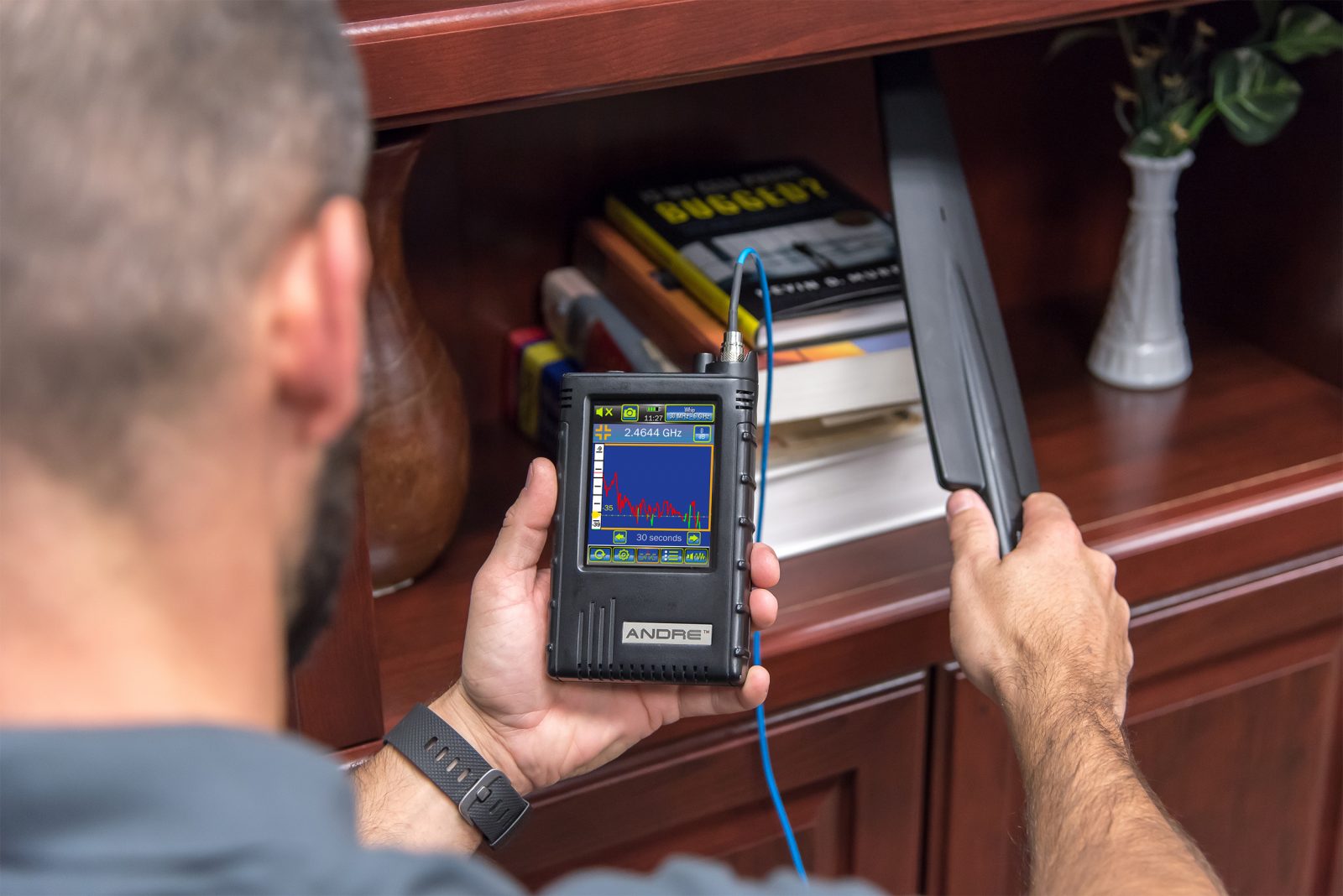
Research Electronics International is pleased to announce the ANDRE™ Advanced Near-field Detection Receiver, a hand-held broadband receiver that detects and assists in locating nearby RF, infrared, visible light, carrier current and other types of transmitters.
Continue reading “New Hand-Held ANDRE Quickly Detects Transmitters”
The Threat:
Arguably one of the biggest threats of confidential conversations leaving a room or area of a facility is the ordinary loudspeaker or well-shielded microphone. When conducting a proper TSCM investigation, it is important to inspect all building wiring to ensure that no conductors are being used to transport stolen audio or video information. It is fairly simple for someone to attach a microphone to any two existing conductors present in an area and pass audio through a speaker “down the line” to be received elsewhere.